
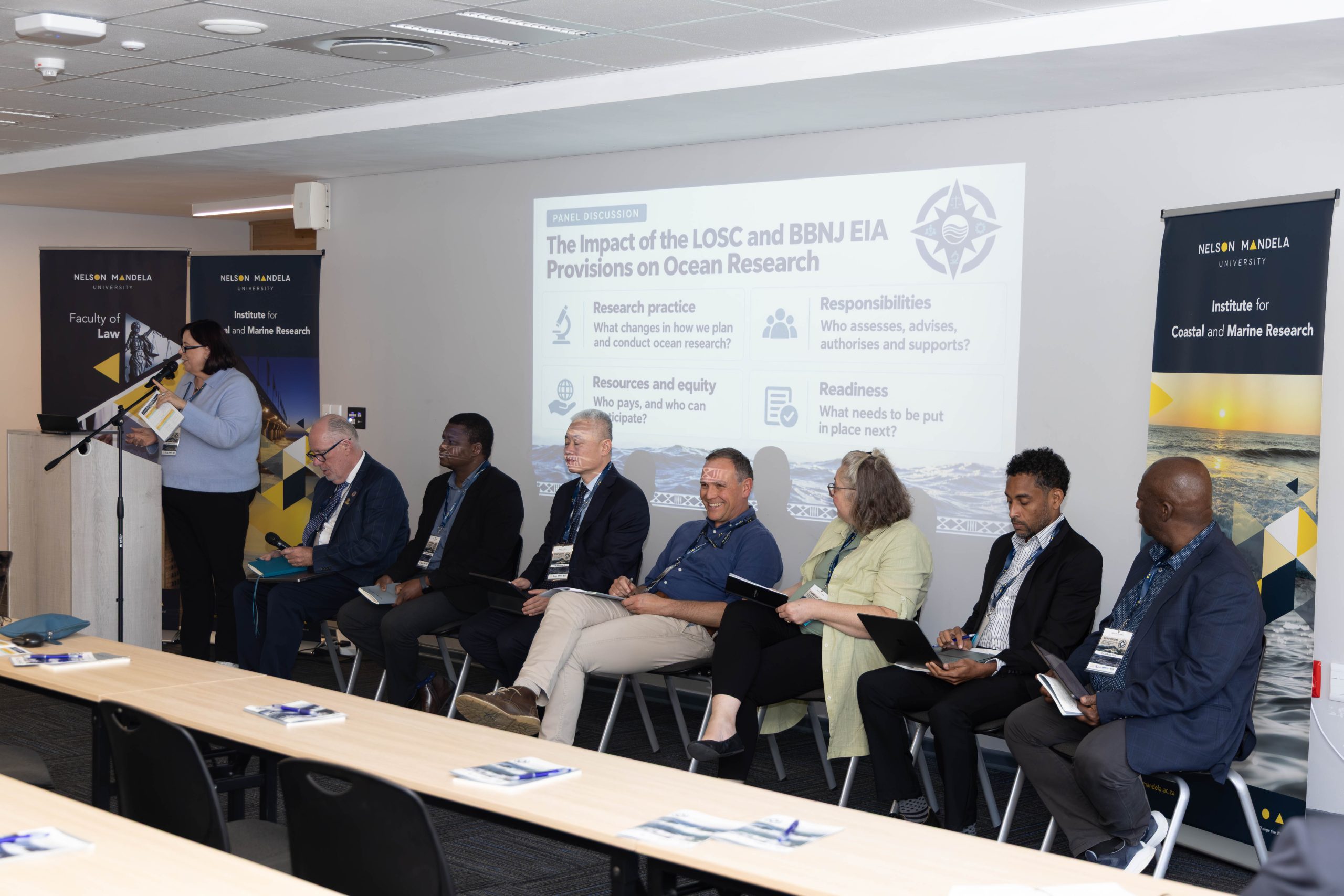
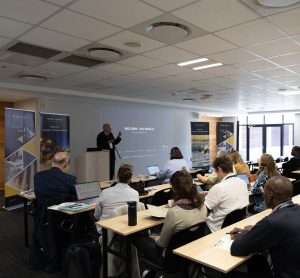
The World Maritime University–Sasakawa Global Ocean Institute (WMU-GOI) participated in the Symposium on Environmental Stewardship at Sea: Tools, Technology and Talent, held from 7 to 9 October 2026 at Nelson Mandela University in South Africa.
Environmental Stewardship at Sea:
Tools, Technology and Talent
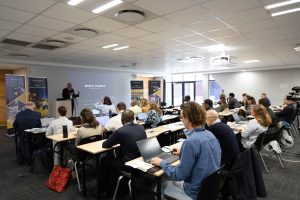
The symposium was co-hosted by WMU-GOI in partnership with Nelson Mandela University’s Institute for Coastal and Marine Research (CMR), the Environmental Law Association of South Africa (ELA), and the National Research Foundation (NRF) – South African Research Chair in the Law of the Sea and Development in Africa. It brought together experts in international law, marine science, engineering, policy and ocean governance to examine practical approaches to implementing Environmental Impact Assessment (EIA) and Capacity-Building and Transfer of Marine Technology (CBTMT) provisions under the United Nations Convention on the Law of the Sea (UNCLOS) and the Agreement on Biodiversity Beyond National Jurisdiction (BBNJ Agreement).
As the BBNJ Agreement has moved into its implementation phase, the symposium provided a timely opportunity to examine how its provisions build on the existing framework under UNCLOS. Discussions highlighted the importance of effective environmental assessment, scientific and technical cooperation, and stronger national capacities to support the conservation and sustainable use of marine biodiversity, particularly in developing States.
WMU-GOI Contributions
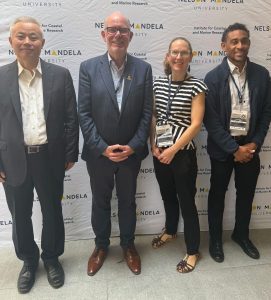
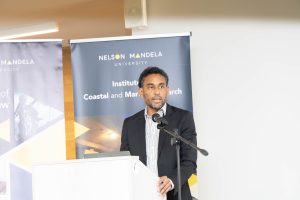
Professor Ronán Long, Director of WMU-GOI, Dr. Ríán Derrig, Assistant Professor, and Dr. Kahlil Hassanali, Postdoctoral Fellow, contributed to discussions on EIA and CBTMT.
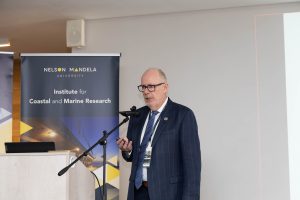
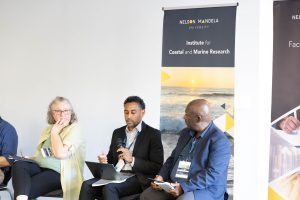
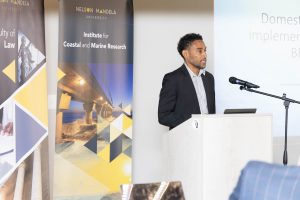
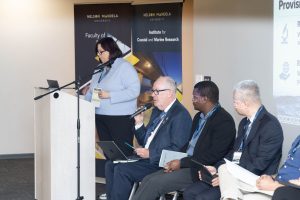
On the first day, Professor Long addressed the international legal framework governing EIAs at sea, while Dr. Hassanali participated in a thematic session which examined, in more detail, EIA under UNCLOS and the BBNJ Agreement. His presentation explored a range of domestic measures that may be necessary to effectively meet obligations and exercise rights related to EIAs under the BBNJ Agreement. Later in the day, both Professor Long and Dr Hassanali also contributed to a panel which delved into the impact of UNCLOS and the BBNJ EIA provisions on ocean research.
© Photo credit: Institute for Coastal and Marine Research
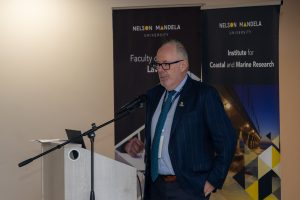
On the second day, focusing on CBTMT, Professor Long and Dr. Derrig presented research on national implementation of the BBNJ Agreement’s CBTMT provisions. Dr. Derrig’s contribution considered how States could go beyond a minimal approach to implementation by using national legislation and State practice to strengthen these commitments and support more ambitious capacity-sharing and technology transfer.
© Photo credit: Institute for Coastal and Marine Research
Advancing BBNJ Implementation Through Collaboration
The symposium further strengthened WMU-GOI’s collaboration with Nelson Mandela University, particularly through its engagement with Dr Tanya Wagenaar and Professor Patrick Vrancken, and with the United Nations Division for Ocean Affairs and the Law of the Sea (DOALOS) and the International Seabed Authority (ISA).
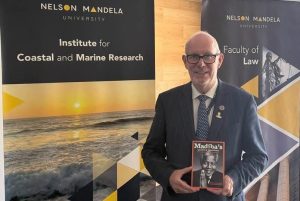
© Photo credit: Institute for Coastal and Marine Research
ABOUT THE world maritime university
The World Maritime University (WMU) in Malmö, Sweden is established within the framework of the International Maritime Organization, a specialized agency of the United Nations. The mission of WMU is to be the world centre of excellence in postgraduate maritime and oceans education, professional training and research, while building global capacity and promoting sustainable development. WMU is an organization by and for the international maritime community and is committed to the United Nations Sustainable Development Goals Agenda.
About THE WMU-SASAKAWA GLOBAL OCEAN INSTITUTE
The World Maritime University’s WMU-Sasakawa Global Ocean Institute (WMU-GOI) is an independent focal point for the ocean science-policy-law-industry-society interface where policymakers, the scientific community, regulators, industry actors, academics, and representatives of civil society meet to discuss how best to manage and use ocean spaces and their resources in accordance with the United Nations 2030 Agenda for Sustainable Development. The Institute was inaugurated in May 2018 and made possible through generous support from The Nippon Foundation of Japan, the Governments of Sweden, Canada, and Germany, as well as the City of Malmö
ABOUT the bbnj clinic programme
Funded by Ireland, the BBNJ Clinic Programme is implemented by the WMU-GOI with the aim to assist Small Island Developing States (SIDS) and Least Developed Countries (LDCs) in ratifying and implementing the Agreement under the United Nations Convention on the Law of the Sea on the Conservation and Sustainable Use of Marine Biological Diversity of Areas beyond National Jurisdiction (BBNJ Agreement)BBNJ Agreement. The Clinic offers legal and policy support to ensure inclusive participation in ocean governance.