

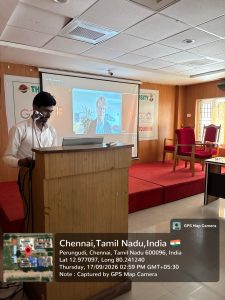
Dr. Ríán Derrig, Assistant Professor at the World Maritime University (WMU)-Sasakawa Global Ocean Institute (GOI) delivered a special lecture on “International redistributive law of areas beyond national jurisdiction: the BBNJ Agreement and the International Seabed Authority”, to students and faculty at Tamil Nadu Dr. Ambedkar Law University on 17 September 2026.
© Credits: Rasith Thariq G, Department of Maritime Law, Tamil Nadu Dr Ambedkar Law University
International redistributive law of areas beyond national jurisdiction:
THE BBNJ AGREEMENT AND THE INTERNATIONAL SEABED AUTHORITY
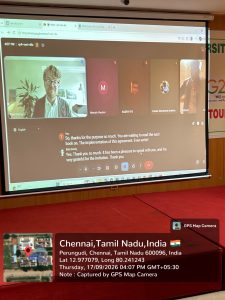
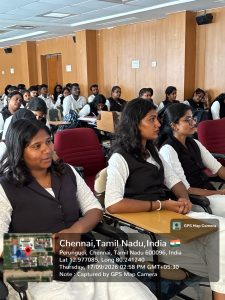
© Credits: Rasith Thariq G, Department of Maritime Law, Tamil Nadu Dr Ambedkar Law University
The lecture was attended by more than 100 students and faculty members from the Department of Maritime Law at Tamil Nadu Dr Ambedkar Law University, India. The university delivers undergraduate and postgraduate education in maritime law, as well as addressing topics like marine environmental protection law and the international law of the sea.
Dr. Ríán Derrig’s participation formed part of the Ireland and WMU-GOI BBNJ Clinic Programme, providing an opportunity to engage with students and faculty across the programme’s research areas and contribute to education and outreach activities by presenting the work of the Clinic in an academic setting.The lecture also highlighted the importance of capacity building and the complexity of implementing comprehensive, multi-topic multilateral agreements such as the BBNJ Agreement
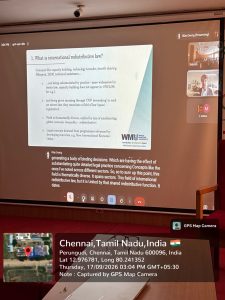
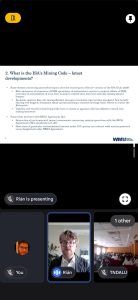
© Credits: Rasith Thariq G, Department of Maritime Law, Tamil Nadu Dr Ambedkar Law University
ABOUT THE wmu-sasakawa global ocean institute
The World Maritime University (WMU)-Sasakawa Global Ocean Institute (GOI) is an independent focal point for the ocean science-policy-law-industry-society interface where policymakers, the scientific community, regulators, industry actors, academics, and representatives of civil society meet to discuss how best to manage and use ocean spaces and their resources in accordance with the United Nations 2030 Agenda for Sustainable Development. The Institute was inaugurated in May 2018 and made possible through generous support from The Nippon Foundation of Japan, the Governments of Sweden, Canada, and Germany, as well as the City of Malmö.