
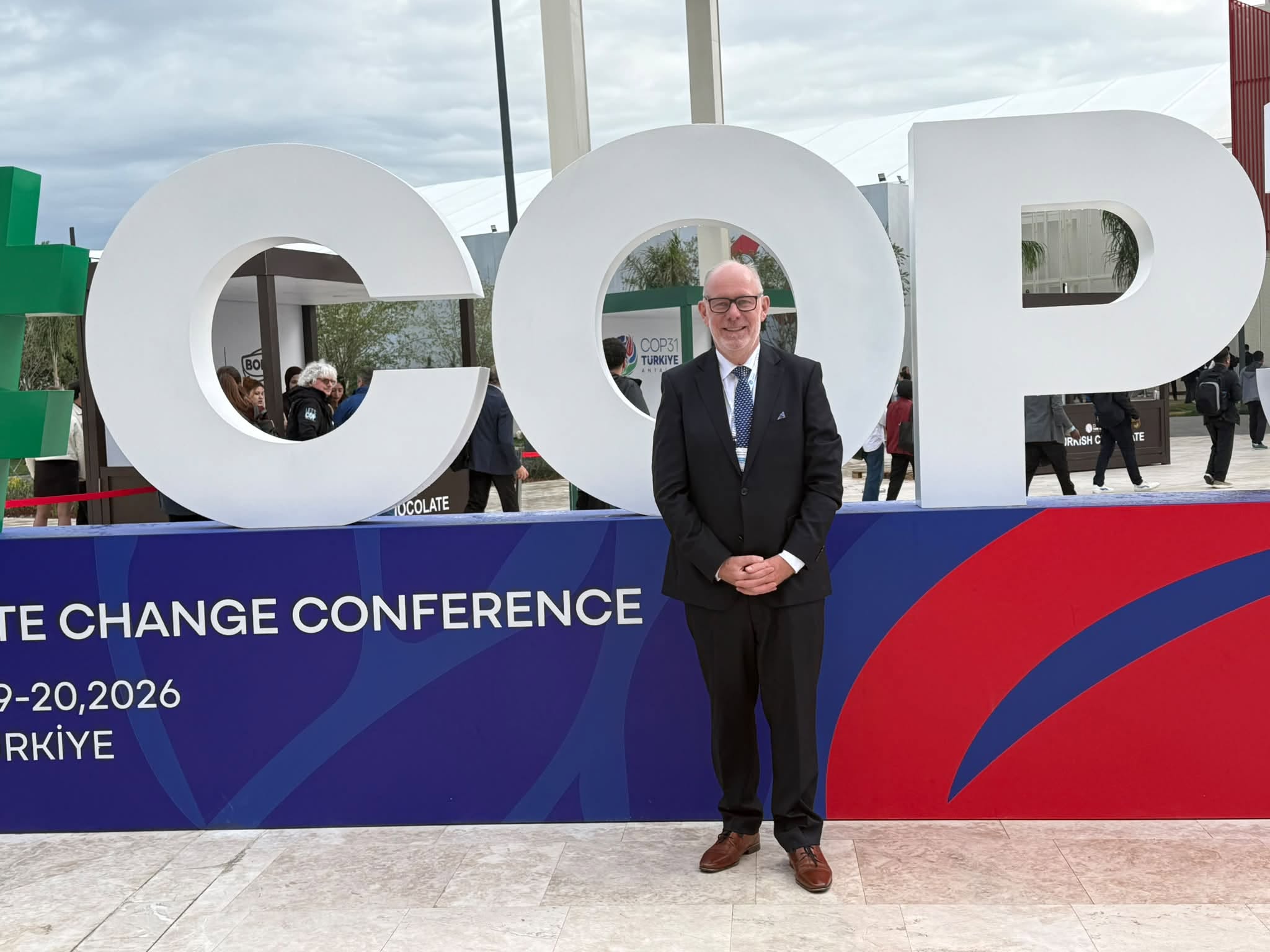
Professor Ronán Long, Director of the World Maritime University-Sasakawa Global Ocean Institute (WMU-GOI) participated in the 31st session of the Conference of the Parties (COP31) to the United Nations Framework Convention on Climate Change (UNFCCC), held in Antalya, Türkiye, from 9 to 20 November 2026.
31st session of the conference of the parties (COP31)
partnerships in SIDS: investing in resilient marine ecosystems and sustainable oceangovernance
COP31 brought together governments, international organizations, civil society, academia and other stakeholders to advance international climate action. Ocean-related priorities featured on the Action Agenda, including marine ecosystem protection, blue carbon and strengthening ocean-climate resilience through science and international cooperation.
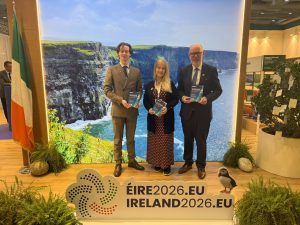
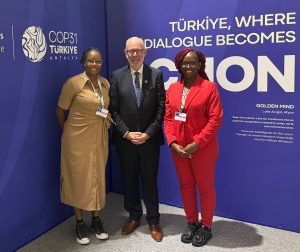
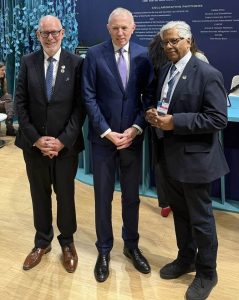
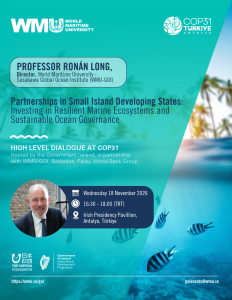
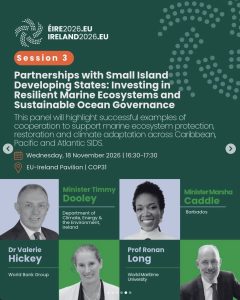
Professor Long contributed to the high-level ministerial dialogue side event, “Partnerships in Small Island Developing States: Investing in Resilient Marine Ecosystems and Sustainable Ocean Governance”, held on 18 November at the COP31 Irish Presidency Pavilion. Hosted by the Government of Ireland, the session explored opportunities to mobilize finance and strengthen partnerships in support of climate resilience and sustainable marine management in Small Island Developing States (SIDS).
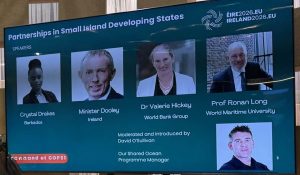
Discussions highlighted the role of Marine Spatial Planning, ocean science diplomacy, local and Indigenous knowledge, and international cooperation in advancing marine ecosystem protection, climate adaptation and sustainable blue economy initiatives. Participants also considered barriers to financing integrated ocean management, including institutional capacity, fragmented funding mechanisms and challenges in developing investment-ready projects.
Professor Long highlighted the importance of international ocean governance frameworks, including the BBNJ Agreement, in supporting sustainable ocean management and strengthening institutional capacity. Drawing on the Ireland and WMU-GOI BBNJ Clinic Programme, his contribution underscored the relevance of international legal frameworks to addressing interconnected ocean-climate challenges and supporting vulnerable island nations
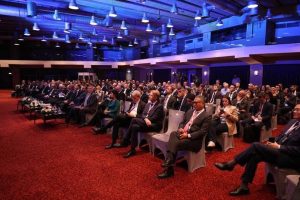
The dialogue brought together representatives from the governments of Ireland, Palau and Barbados, alongside the World Bank and the Presidency of the European Council, and highlighted the importance of partnerships in advancing marine ecosystem protection, restoration and climate resilience across the Caribbean, Pacific and Atlantic regions.
About cop
COP (Conference of the Parties) is the highest-level global climate summit held annually under the United Nations Framework Convention on Climate Change (UNFCCC), which was adopted in 1992. Bringing together heads of state, ministers, scientists, business leaders, and civil society representatives from around the world, COP serves as the primary platform for negotiating and advancing collective action to combat climate change.
ABOUT THE world maritime university
The World Maritime University (WMU) in Malmö, Sweden is established within the framework of the International Maritime Organization, a specialized agency of the United Nations. The mission of WMU is to be the world centre of excellence in postgraduate maritime and oceans education, professional training and research, while building global capacity and promoting sustainable development. WMU is an organization by and for the international maritime community and is committed to the United Nations Sustainable Development Goals Agenda.
About THE WMU-SASAKAWA GLOBAL OCEAN INSTITUTE
The World Maritime University’s WMU-Sasakawa Global Ocean Institute (WMU-GOI) is an independent focal point for the ocean science-policy-law-industry-society interface where policymakers, the scientific community, regulators, industry actors, academics, and representatives of civil society meet to discuss how best to manage and use ocean spaces and their resources in accordance with the United Nations 2030 Agenda for Sustainable Development. The Institute was inaugurated in May 2018 and made possible through generous support from The Nippon Foundation of Japan, the Governments of Sweden, Canada, and Germany, as well as the City of Malmö
ABOUT the bbnj clinic programme
Funded by Ireland, the BBNJ Clinic Programme is implemented by the WMU-GOI with the aim to assist Small Island Developing States (SIDS) and Least Developed Countries (LDCs) in ratifying and implementing the Agreement under the United Nations Convention on the Law of the Sea on the Conservation and Sustainable Use of Marine Biological Diversity of Areas beyond National Jurisdiction (BBNJ Agreement)BBNJ Agreement. The Clinic offers legal and policy support to ensure inclusive participation in ocean governance.